
(888) 360-2525
Call us
Aug
Hospital Security: How Guards Protect Patients, Staff, and Property
In a hospital, safety is not just about medical treatment. The well-being of patients, staff, and visitors hinges on effective healthcare security services. Hospitals face unique challenges, from preventing unauthorized access to responding to emergencies.
Hospital security combines trained officers, access control, surveillance and clear protocols for emergencies. This guide explains what hospital security guards do day to day, the requirements and protocols a hospital security program is built on, and the questions patients and staff ask most often.
All Nation Security Services provides licensed security guards for hospitals, healthcare clinics and community clinics across California, Nevada, Texas, and Florida, and every officer we assign to a California hospital or clinic is SB 525 compliant.
The Growing Need for Healthcare Security
Hospitals are places of healing, but they are also vulnerable to various threats. From external criminal activities to internal safety concerns, healthcare facilities face a wide range of risks. Theft, vandalism, and even violent incidents can disrupt the daily operations of a hospital and put everyone inside at risk. These threats are becoming more complex as hospitals expand and medical technology advances.
Because of these growing risks, healthcare facilities are investing more in hospital security services. The presence of professional security personnel helps maintain order and ensures that the focus remains on patient care. Effective healthcare security services are no longer just a luxury—they are a necessity in today’s healthcare landscape.
Key Responsibilities of Healthcare Security Personnel
Hospital security services go far beyond simply patrolling the premises. Security personnel have specific roles and responsibilities that contribute to the overall safety of the facility.
Managing Access Control
One of the primary duties of hospital security guards is to manage access points. They ensure that only authorized personnel enter restricted areas, such as patient rooms, operating theaters, and staff-only zones. With the rise of unauthorized access, security staff also monitor entrances, exits, and parking lots to ensure visitors follow hospital policies and prevent any unauthorized access.
Surveillance and Monitoring
Another key responsibility is constant surveillance. Security personnel monitor video feeds from cameras positioned around the hospital. These cameras help detect any suspicious activities, monitor public spaces, and ensure staff and patient safety. Security guards also assist in identifying any potential security threats in real-time, which is vital in high-stakes environments like hospitals.
Emergency Response
In emergencies, hospital security guards play a pivotal role in managing situations effectively. Whether it is an active shooter, fire, or medical emergency, security staff are trained to respond swiftly. They provide immediate first aid when needed, direct people to safety, and coordinate with law enforcement and emergency responders. Hospital security services are designed to minimize harm during such incidents and create a controlled, calm environment.
Handling Conflicts and De-Escalation
Security guards also handle conflict resolution. In a hospital, tensions can run high. Disputes may arise between patients, staff, or visitors. Security personnel are trained in de-escalation techniques, which help manage potentially volatile situations without resorting to force. By addressing concerns calmly and fairly, security guards contribute to maintaining a peaceful hospital environment.
Hospital Security Requirements and Protocols
No single federal rule sets a minimum number of guards for a hospital. The requirements come from workplace safety law, accreditation standards and each hospital’s written plans, and several states now spell them out.
Requirements
California: Cal/OSHA’s Workplace Violence Prevention in Health Care standard (Title 8, §3342) requires covered health facilities to keep a written workplace violence prevention plan and a log of every violent incident. The plan must address sufficient staffing, including security personnel who can maintain order and respond to incidents in a timely manner.
California health care minimum wage (SB 525): since October 16, 2024, SB 525 has set a higher minimum wage for workers at covered health care facilities, including hospitals, community clinics and many other healthcare clinics. It covers guard duties, and it can apply to officers employed by a security contractor. Every officer All Nation assigns to a California hospital or clinic is SB 525 compliant.
Texas: since September 1, 2024, Senate Bill 240 has required hospitals and other licensed health facilities to adopt a written workplace violence prevention policy and plan and to form a workplace violence prevention committee.
Nevada: medical facilities must keep a written workplace violence prevention plan and a workplace safety committee, including procedures for getting help from security guards or public safety agencies (NRS 618.7312).
Accreditation: the Joint Commission’s workplace violence prevention requirements have applied to accredited hospitals since January 1, 2022.
Protocols
Those plans turn into daily protocols that security officers carry out in hospitals and clinics:
- Access control for restricted areas such as pharmacies, nurseries, operating rooms and staff-only zones
- Visitor check-in and badge procedures, including after-hours entry
- Response to duress alarms and emergency codes, with clear roles for security and clinical staff
- De-escalation first, with physical intervention limited to what hospital policy and the law allow
- Same-day incident reports that feed the hospital’s violent incident log
- Escorts for staff walking to parking areas after dark
In California, hospitals are also preparing for weapons screening at public entrances. Assembly Bill 2975 requires Cal/OSHA to adopt a hospital weapons detection screening standard by March 1, 2027, and a draft was released in September 2026.
Benefits of Professional Healthcare Security Services
Hiring professional healthcare security services offers several benefits to hospitals. These services not only increase safety but also improve operational efficiency.
Risk Mitigation
Hospitals house expensive medical equipment, medications, and sensitive patient information. With a dedicated security team in place, the risk of theft and vandalism is significantly reduced. Security staff patrol high-risk areas and monitor surveillance systems to spot threats early and prevent any major incidents from escalating.
Improved Patient and Staff Safety
When security is visible and proactive, both patients and staff feel safer. Security guards are trained to handle potentially dangerous situations without disrupting patient care. Their presence reassures staff that they can focus on their responsibilities without worrying about their personal safety. This heightened sense of security fosters a better working environment for hospital personnel, allowing them to concentrate on providing quality care.
Regulatory Compliance
Hospitals are subject to strict healthcare regulations. Security services must be tailored to meet various compliance standards, such as HIPAA, CMS, and OSHA. These standards govern everything from patient privacy to workplace safety. Healthcare security personnel play a key role in helping hospitals comply with these standards by maintaining secure areas, preventing unauthorized access to sensitive information, and ensuring that all safety protocols are followed.
Enhanced Emergency Preparedness
In the case of an emergency, having a well-trained security team is a major asset. Hospitals need to be prepared for a variety of emergency scenarios, from natural disasters to active shooter situations. Security professionals are trained to handle these situations swiftly and effectively, ensuring that patients, staff, and visitors are protected. In some cases, hospital security can assist with evacuations, direct first responders, and even provide medical assistance if needed.
The Role of Technology in Healthcare Security
With the advancement of technology, hospital security services have become more efficient and comprehensive. Hospitals are adopting various technological tools to support security efforts. These tools include surveillance systems, access control software, and emergency notification systems.
Surveillance Technology
Modern hospitals are equipped with high-definition surveillance cameras that offer 24/7 monitoring of the premises. These cameras are not only useful for detecting criminal activity but also help with monitoring the safety of patients and staff. Security teams can use surveillance footage to investigate incidents and provide evidence when needed. Additionally, many hospitals integrate surveillance cameras with AI-powered software that can automatically detect suspicious activity.
Access Control Systems
Access control technology allows hospitals to restrict access to certain areas. For example, some hospitals use key card systems or biometric scanners to limit entry into sensitive areas. These systems are useful for preventing unauthorized access to areas like operating rooms, pharmacies, and research labs, where the risk of theft or contamination is higher.
Real-Time Alerts and Notifications
Real-time alerts and notifications are another example of how technology improves hospital security. Many hospitals use advanced monitoring systems that can instantly send alerts to security personnel if a potential threat is detected. These systems can notify security guards about unauthorized access, emergency situations, or any unusual activities, allowing for a faster response.
Visitor Management Systems
Modern visitor management systems help hospitals track who is entering and leaving the facility. These systems can capture visitor information, issue badges, and even track when someone enters restricted areas. This added layer of security helps hospitals manage visitor flow and prevent unauthorized individuals from gaining access to sensitive locations.
Hospital Security FAQ
Do hospital security guards carry guns?
Some do and many don’t. Arming officers is each hospital’s decision, based on its risk assessment, and armed officers must meet their state’s licensing rules for armed guards, such as a firearms permit in California.
Can hospital security detain you?
Hospital security officers are not police officers. In general they can ask a person to leave the property, and they can detain someone only where state law allows a private person to make an arrest. Holds for psychiatric evaluation are decided by clinicians and law enforcement, not by security. Rules vary by state.
What does a security officer at a hospital do?
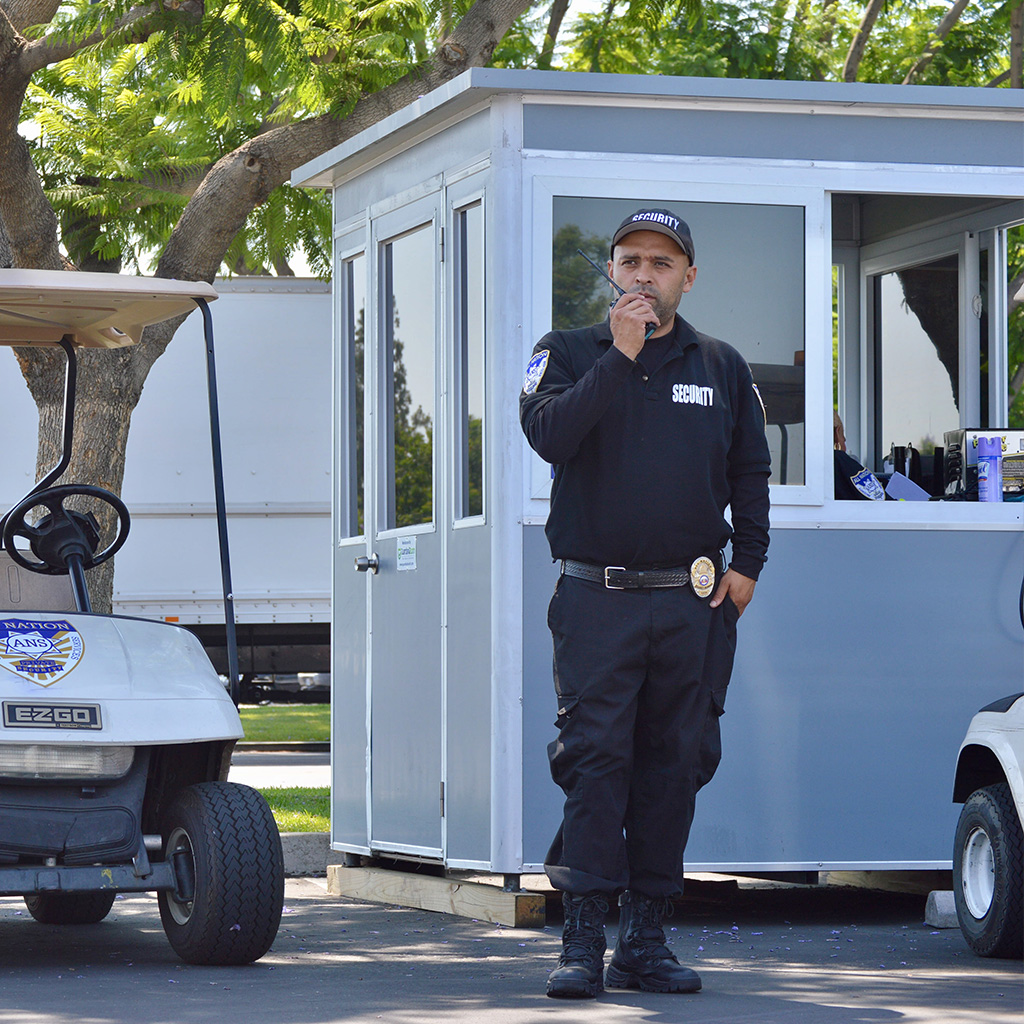
A hospital security officer controls access to restricted areas, manages visitors, patrols the building and parking areas, responds to alarms and emergency codes, helps de-escalate conflicts, escorts staff, and documents every incident.
What are the requirements to be a hospital security guard?
In California, every guard must hold a BSIS guard registration, which requires Power to Arrest training before the card is issued, 32 hours of security officer skills training within the first six months, and 8 hours of continuing training every year. Armed officers also need a firearms permit. Hospitals typically add training on de-escalation, patient privacy and their own emergency codes.
How All Nation Security Services Can Help Your Healthcare Facility
At All Nation Security Services, we understand the unique challenges that healthcare facilities face. Our tailored hospital security services ensure that patients, staff, and property are safeguarded at all times. With trained personnel, advanced security technology, and a commitment to compliance, we offer comprehensive security solutions that meet the specific needs of your healthcare environment. Learn more about our security services for businesses and how we can assist with your hospital’s security needs.